Environmental
Environmental Commitment
Kirby is committed to continuously improving the compatibility of our operations with the environment.
Kirby pledges to:
Conduct our business and operate our vessels in a manner that protects the environment and the health and safety of our employees and the public
Comply with all applicable laws and regulations concerning the environment and apply responsible standards where laws and regulations do not exist
Adhere to a zero-tolerance policy for willful violations by our employees
Recognize and be responsive to public concerns about waterborne transportation and its effects on the environment
Commit to reduce overall emissions and waste generation
Participate with government and the public in creating responsible regulations and standards to safeguard the workplace, community and environment
Establish and maintain, in cooperation with public authorities and others, contingency procedures and plans to mitigate the effects of accidents which may occur
Conduct annual review and audit of Kirby’s Environmental Management System for continuous compliance
Our goal is NO HARM to the Environment – zero spills and zero releases.

Marine Transportation: A Good News Story for Safety and the Environment
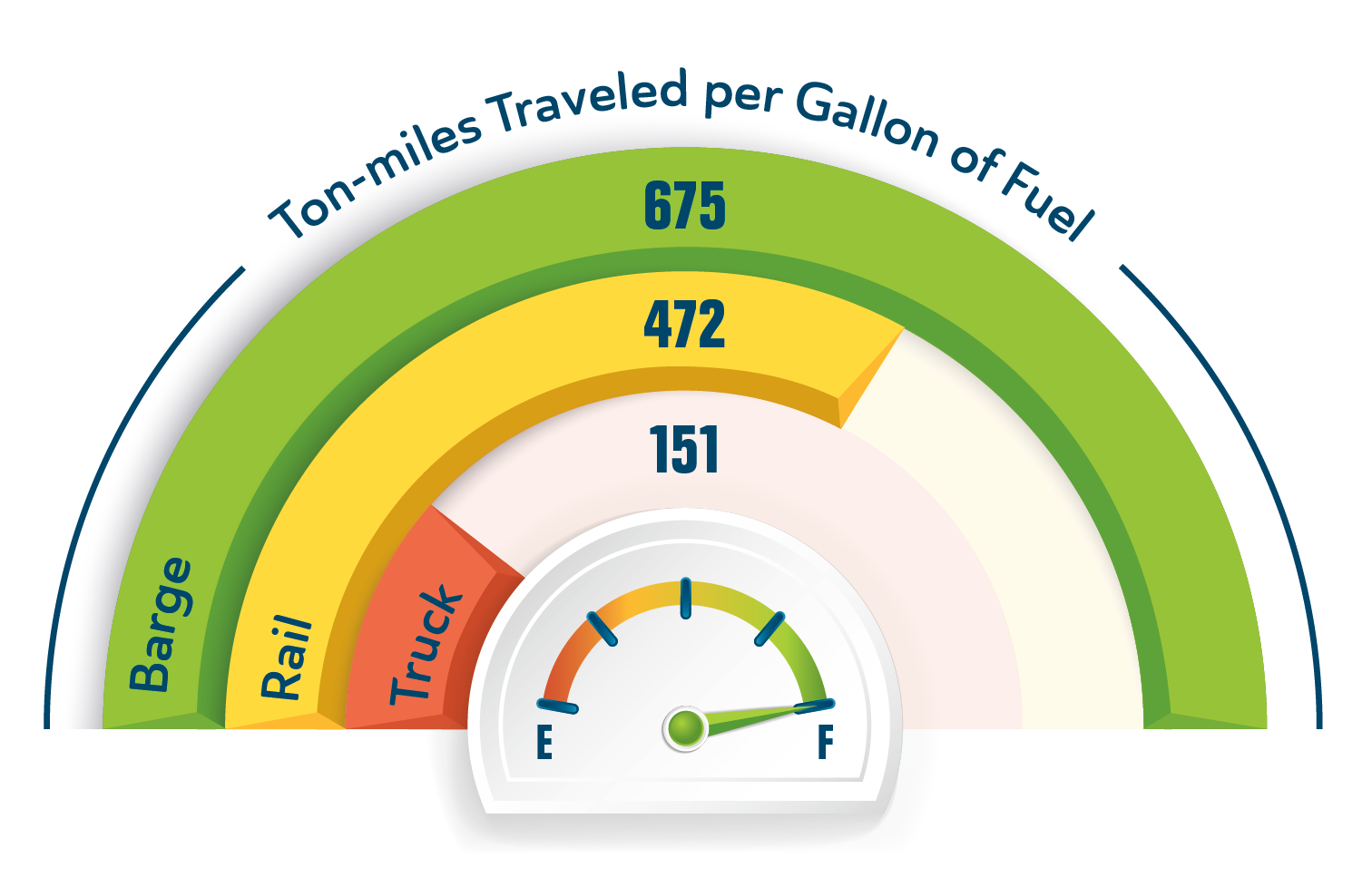
Barges: Most Fuel Efficient
A rail car is 30% less efficient than a barge
A truck is 78% less efficient than a barge
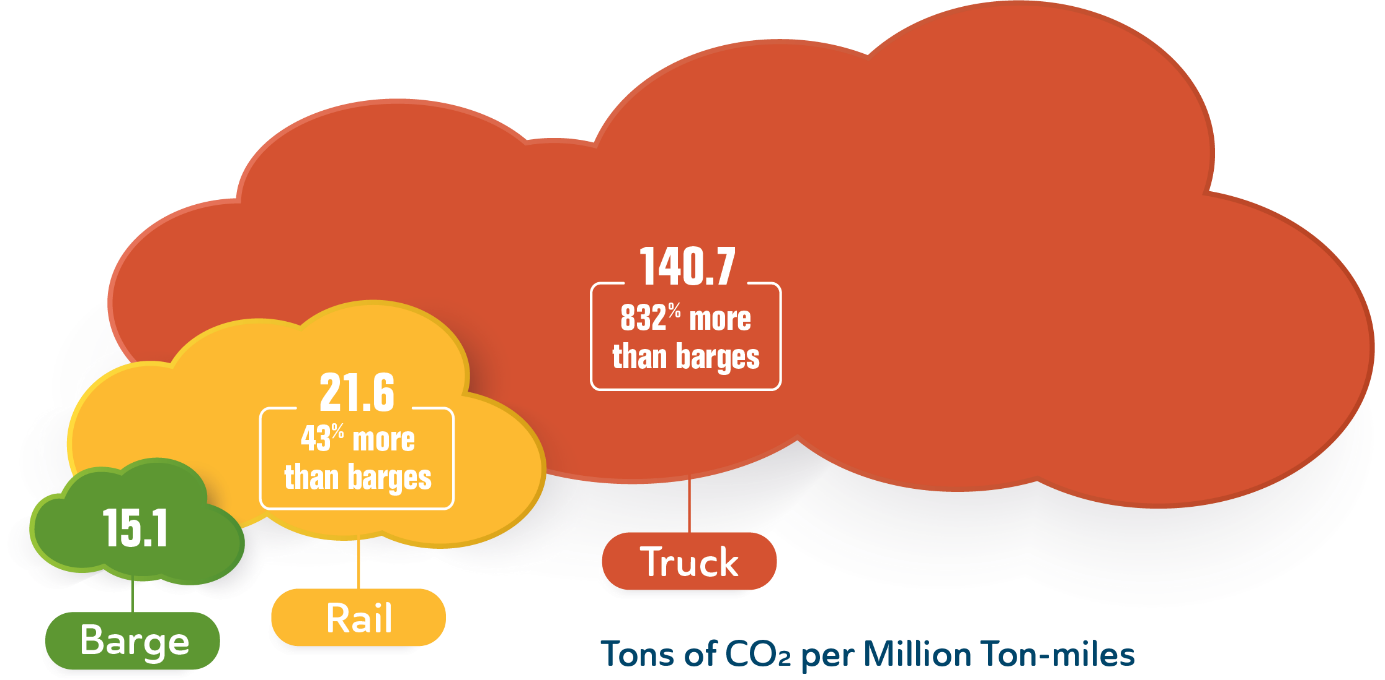
Barges: Lower CO2 Emissions
To move an identical amount of cargo by rail generates 43% more carbon dioxide than by barge, and trucks generate over 800% more emissions.
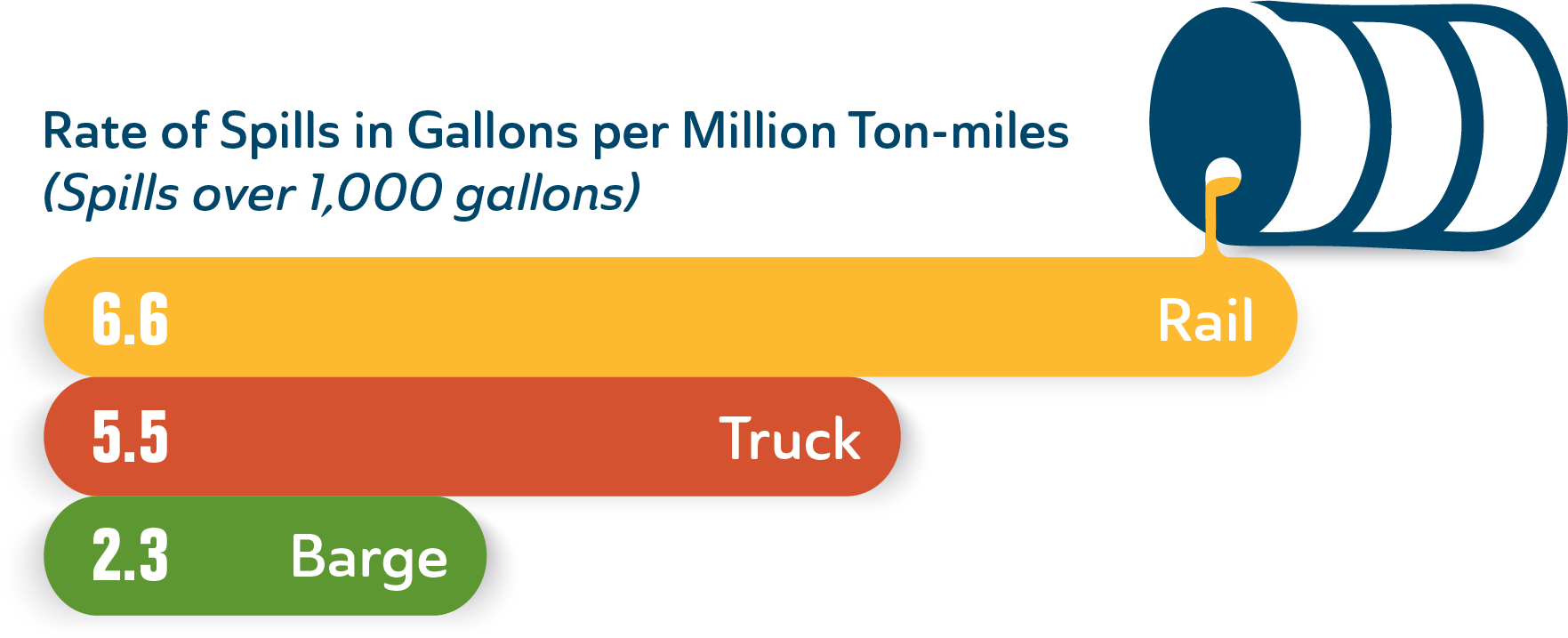
Barges: Fewer Spills
Inland waterways transportation is safest relative to Rail and Truck.
All transport modes continuously work hard to prevent accidents, human errors, and other causes of spills. Statistics for 2001-2019 show trucks have 239% and rail cars have 287% more incidents than barges.
Marine Transportation – GHG Emissions
~98% of Kirby’s emissions are from the marine transportation fleet
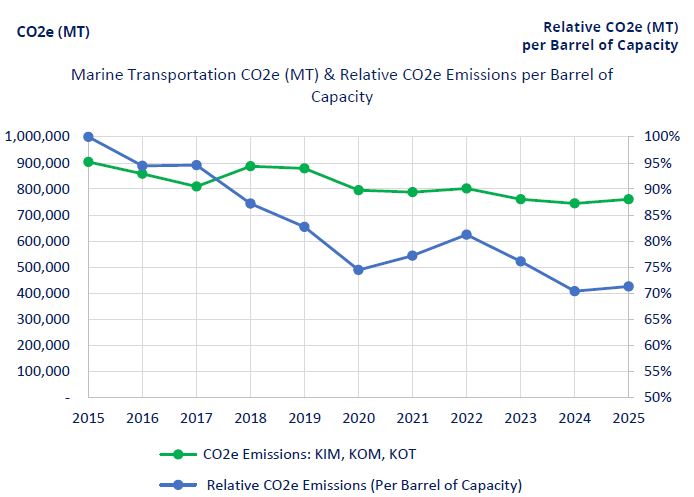
Scope 1: Marine Transportation Fleet CO2e (MT)
Emissions Reductions (2015 to 2025)
- Since 2015, total CO2e emissions have declined ~16% despite significant growth in the fleet
- Total barrel capacity up 18%
- Result of inland fleet acquisitions offset by offshore fleet retirements
- Since 2015, average age of inland boats is down ~13 years and offshore boats is down ~18 years
Emissions Reduction Targets
Short term target: 25% emissions reduction per barrel of capacity by 2024
- Target achieved in 2024
Long term target: 40% reduction of emissions per barrel of capacity by 2040
Kirby Corporation – GHG Emissions Summary
Kirby Corporation Emissions

Scope 1 Emissions Performance
- ~98% of Kirby Corporation Scope 1 GHG emissions come from marine transportation operations, primarily towboats and tugboats
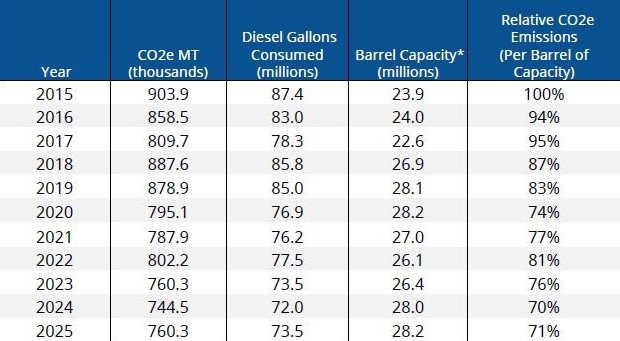
- Ultra-low-sulfur diesel fuel consumption and CO2e emissions have declined 16% since 2015 despite significant growth in the number of vessels in the fleet
- Emissions data reporting project completed in 2022 – helps Kirby to better understand its emissions footprint on a micro level and assist customers in achieving their emission reduction goals
Marine Transportation Fleet – Scope 1 – CO2e Direct Emissions
Scope 2 Emissions Performance
- 100% of Scope 2 energy is consumed from the grid
- Signed a 36-month agreement for 100% green e-certified energy for all Kirby marine transportation facilities in Texas
- 100% renewable representation
- ~23% of Scope 2 energy is renewable
*Barrel capacities reflect Kirby Inland Marine and Kirby Offshore Marine operating tank barge
Note: Kirby uses EPA emission factors to calculate Scope 1, 2 & 3 emissions
Decarbonizing Initiatives – 40% Reduction by 2040
When it comes to decarbonizing the company, Kirby is pursuing many paths.
Kirby’s commitment to decarbonization with a 40% intensity reduction by 2040 of Scope 1 Emissions, roughly 160,000 metric tons of CO2 is well underway. Through appropriate combination of these initiatives, the potential exists to meet emission targets without the application of carbon offsets.
- Biofuels with emission reductions of 20-30% per towboat or tugboat*
- Hybrid power technologies with reductions up to 80% per towboat or tugboat
- Christened one of the first diesel-electric hybrid towboats in the United States in 2023, started construction on the second in 2024, and the third in 2025
- Engine re-powers with reductions of 15-20%
*Based on internal calculation via external emission factors for lifecycle analysis
- Dedicated development of future carbon reduction techniques, alternative fuels, and power sources and their respective supply chains.
- Embedded emission reduction strategies in operations:
- Fuel management procedure implemented
- Extensive fleeting network and fleet boat capacity enables delivery of barge equipment to customer docks with smaller horsepower vessels
- Company policy to require shutdown of main engines during cargo transfer (when safe to do so as determined by the captain)
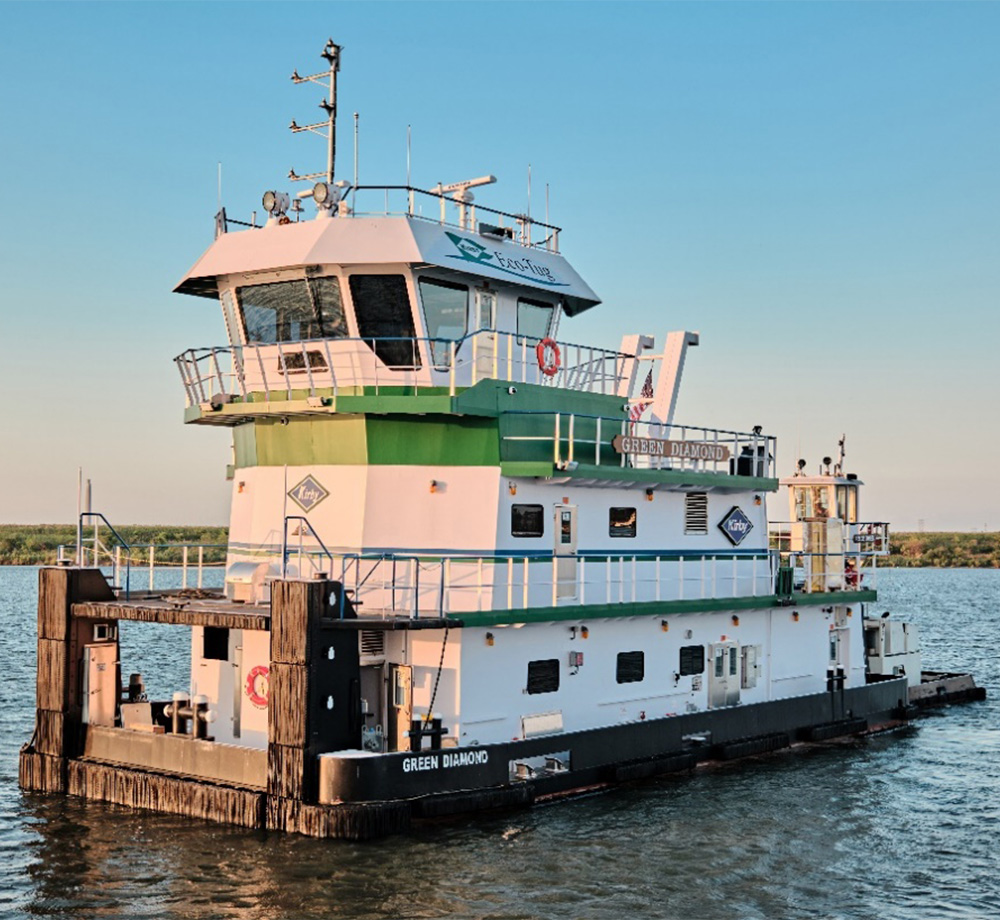
Inland Marine – Hybrid Electric Towboat: M/V Green Diamond
Kirby is one of the first inland marine transportation companies to own and operate a diesel-electric hybrid towboat in the United States.
- Began service in 2024
- Proprietary in-house design, development, and construction for a diesel-electric inland push boat incorporating an energy storage system (ESS) that significantly reduce emissions
- Reduced maintenance schedule and costs against conventional vessels
- Efficiency gains in multiple operating modes
- Fuel savings potential of up to 80%
Advanced the diesel-electric hybrid fleet with construction of the second towboat in 2024
and the third in 2025
Kirby Offshore Marine
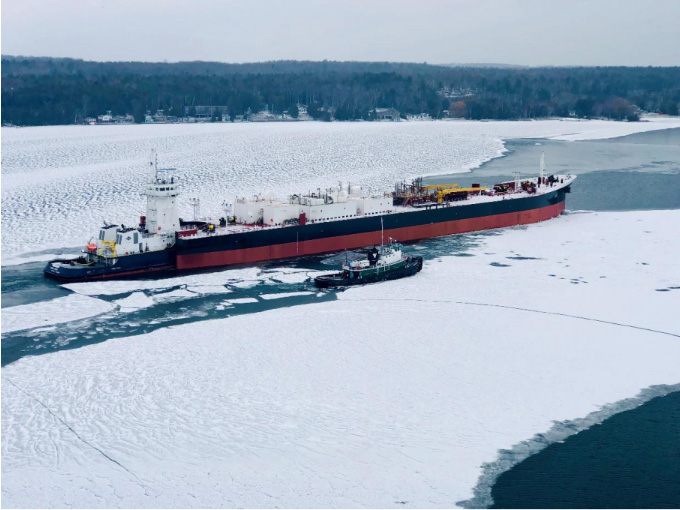
Kirby Offshore Marine was a first mover to integrate Tier 4 engines into its tugboat fleet
RONNIE MURPH
RANDY McCRANEY
CAPE ANN
CAPE HENRY
CAPE HATTERAS
CAPE CANAVERAL
CAPE LOOKOUT
~25% of fleet TIER 4
As engine tier level increases, engines produce less emissions and become more efficient and environmentally friendly
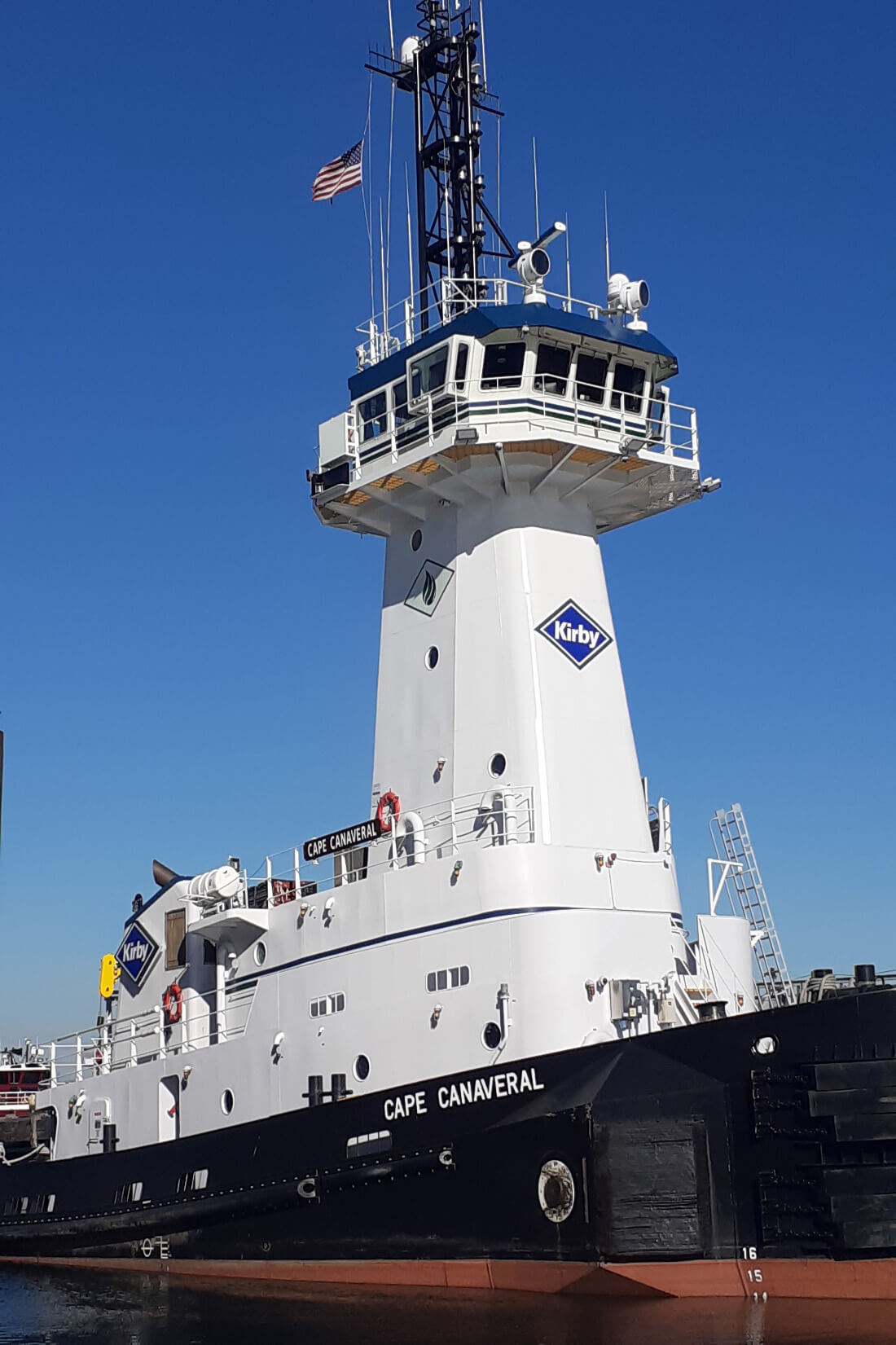
This picture of the Cape Canaveral was taken at the Kirby Offshore Marine, Staten Island NY facility
Going Above and Beyond – Marine Transportation
- Kirby implemented usage of ultra-low-sulfur diesel on all vessels in 2012
- All tank barges are double-hulled to better prevent environmental spills
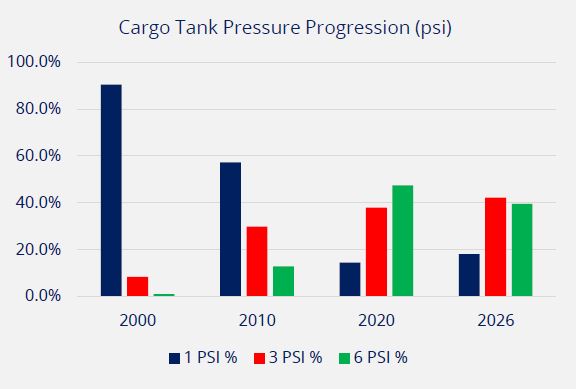
- Voluntary usage of 6 psi vs. 3 psi vapor relief value settings on inland tank barges (the industry standard) significantly reduce cargo vapor emissions*
- ~44% of Kirby’s clean chemical fleet is fitted with 6 psi vapor relief values
- Kirby has the largest 6 psi barge fleet in the U.S. (company estimate, as of year-end 2025)
*6 psi barges are more environmentally friendly and have a lower probability of releasing vapors into the air than 1 psi and 3 psi barges.
- Company policy does not allow for the discharge of bilge overboard, even if the vessel is equipped with an oil-water separator
- Large tank barge fleet reduces unnecessary emissions and waste
- Dedicated product tows reduce barge cleaning between cargos
- Smaller fleeting boats reduce fuel consumption and emissions
- Linehaul service improves overall barge to boat ratio (Kirby 3:1, industry 2:1)
- Ongoing boat and engine replacement program improves efficiencies and reduces emissions
- Starting in 2014, Kirby began transitioning its engine service oil changes from mineral to synthetic to better serve the equipment and the environment.
- 70% of inland marine boats use synthetic oil
- Barge cleaning facility operations focus on residualcargo recovery seeking to mitigate waste andefficiency on the cleaning process, reducingemissions by approximately 98% (based on internalestimates)
- Kirby serves as a leader in numerous industry organizations that help define industry regulations and improve air and water quality
Operating with Environmental Stewardship
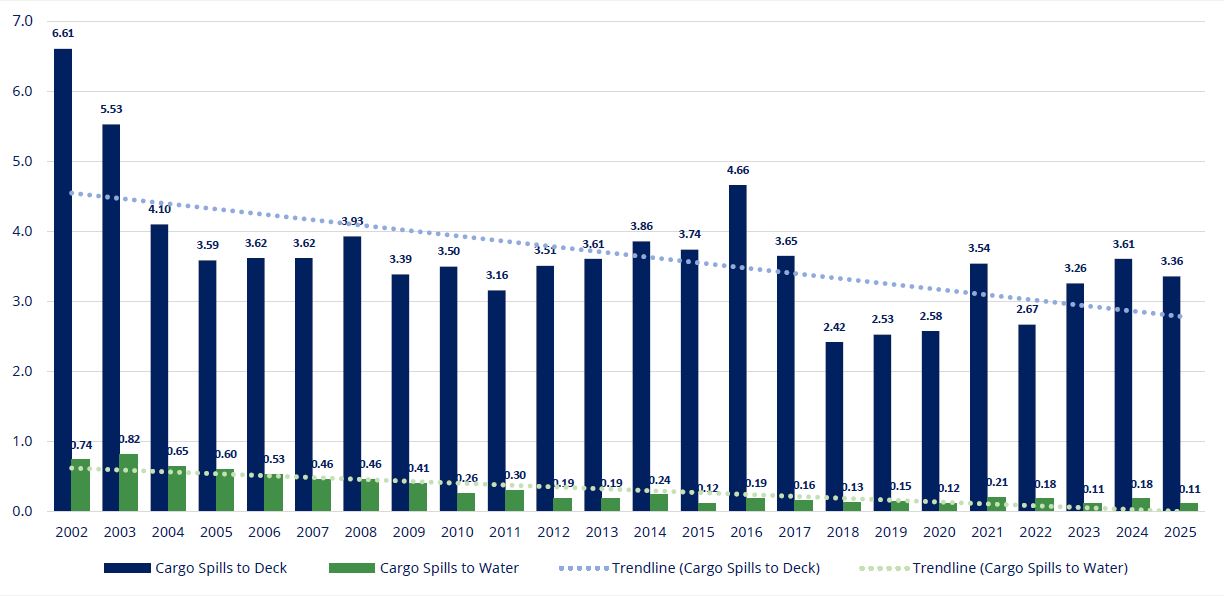
- At Kirby, no spill is too small – all cargo spills, even if only 1 drop, are recorded and reported
- Cargo spills to water have declined since 2002 representing an 85% decrease
- In 2025, approximately 5,100 cargo transfer audits were completed
- Kirby is committed to continuous improvement through cargo transfer audits, regular tankerman proficiency evaluations, advanced training courses, review and implementation of best practices, review of near-miss events, and quarterly tankerman meetings
Inland vs. Offshore Marine
Kirby is committed to a cleaner and more efficient offshore fleet
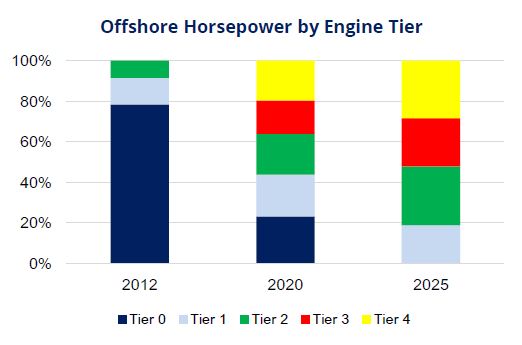
- By the end of 2025, Kirby will have spent over $29 million dollars over the last five years upgrading and repowering vessels from lower tiered engines to more environmentally friendly tiered engines
- In the last five years, Kirby’s Tier 3 equipment has increased by ~50%
- Ongoing boat and engine replacement program improves efficiencies and reduces emissions
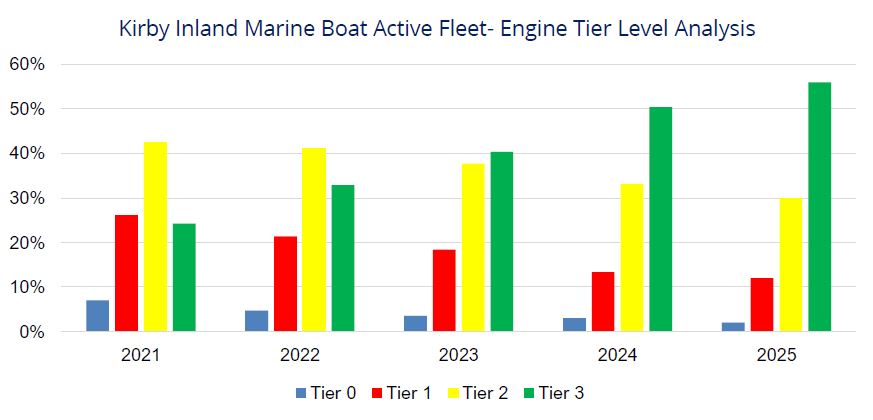
As engine tier level increases, engines produce less emissions and become more efficient and environmentally friendly
Engine Tier Strategy
As part of its offshore growth strategy, Kirby invested in upgrading its fleet, removing all Tier 0 engines
Since 2015 Kirby’s investment strategy has spent
$200M+ on Tier 3 and 4 engines and boats
Ballast Water Management
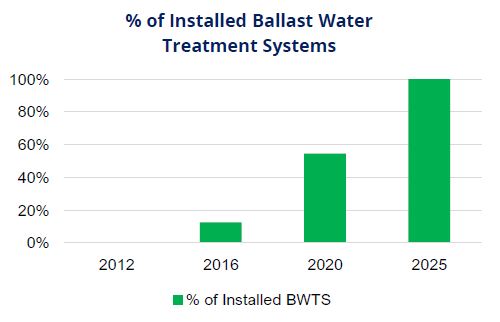
Kirby has installed ballast water treatment systems
on 100% of its fleet
Since 2015, Kirby’s has spent $110M+ on ballast
water treatment systems
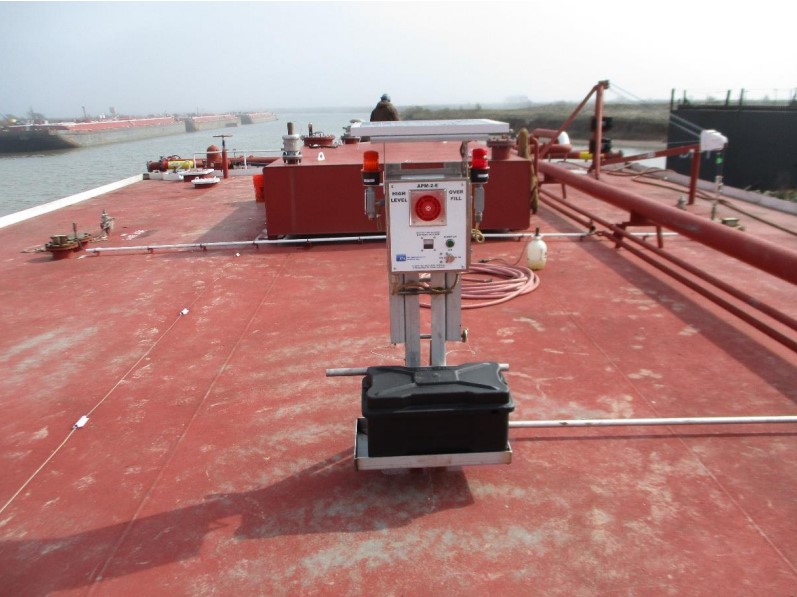
Since 2017, Kirby Inland Marine has spent over $11 million investing in solar panels for ~840 barges that power high-level alarm systems
- Allows the barges to load and discharge at facilities that do not have high level alarm connections on shore
- Ensures tankerman can use the alarm system on loads and discharges which gives them a safety system to help prevent spills to the environment
Power Generation Solutions
Kirby manufactures power generation equipment that is creating opportunities in new commercial and industrial markets
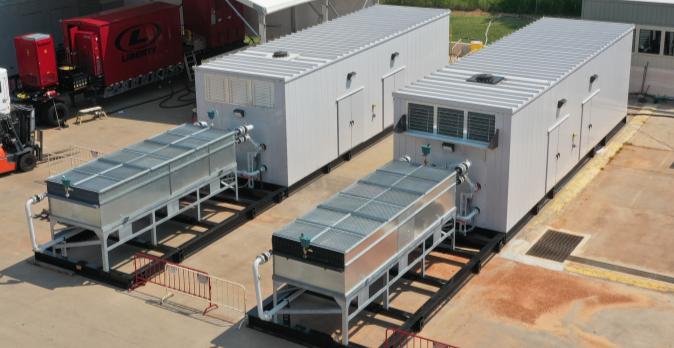
Natural Gas Generator Systems
High Output (17.9MW turbine and 4MW recip) with the ability to combine many units into a single power plant with our power distribution systems
Designed for harsh operating environments in critical applications that require reliability and flexibility
Scalable operation with multiple generators
Modular design allows customers to grow their power plant to meet their evolving power needs
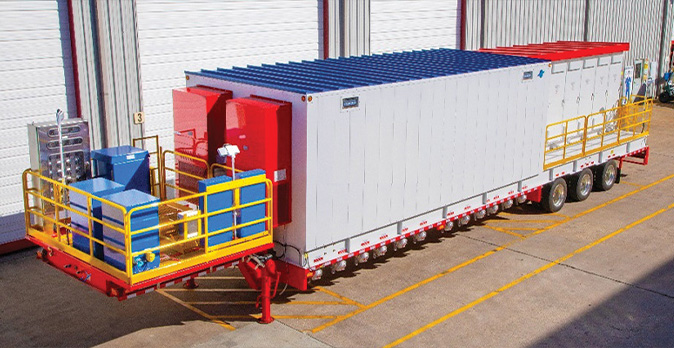
Mobile Power Distribution Systems
Environmentally Friendly Oilfield Solutions
Kirby manufactures technologies that significantly reduce the environmental impact of hydraulic fracturing
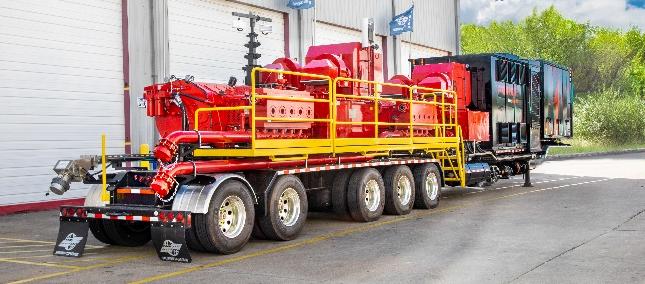
Manufacturing
‒ Electric unties
‒ Noise-reducing units
‒ Natural gas-powered units
Distribution
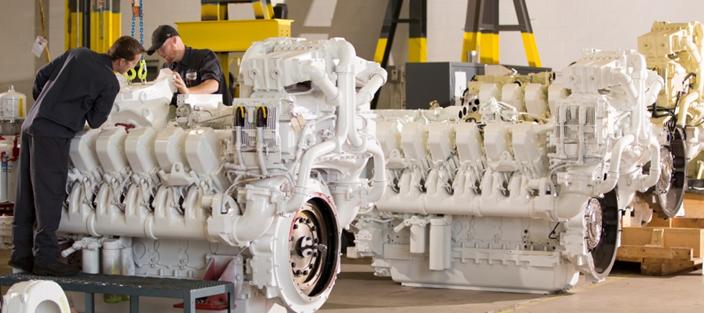
‒ Key OEMs include Allison Transmission, MTU, Volvo and Deutz